
How to explain? Getting facts on the page
The facts are tricky. The concept is complex. Learn how to write explainers your readers will understand - and enjoy.
Dear Climate Culinarians,
You've got a lot to explain! Don’t worry, you’re not six years old (I think?!), and I’m not reprimanding you. Quite the contrary: Help is on the way!

You and I share a passion for climate solutions and food, so we also share the need to explain stuff. A lot. Luckily, this month has five Thursdays, so there is room for writing tips. Some will even work for conversations!
In the past weeks, I wrote about pollination services, among other bee-related things. When I started editing that section, it occured to me that I never said what pollination actually was. This is elementary school material, so it shouldn’t be more than a quick reminder and an easy task. Right? And yet, can you really explain bees and flowers from the top of your head? I couldn’t. I did my reading, squeezed facts, terms and rambling thoughts into notes. Soon enough, I edited the heck out of a draft until it was as close as possible to the brief paragraph I wanted. Along the way, I kept an eye on what worked best to get me there. And now I’ll share what I learned.
How to explain? 3 tips for your writing
No matter if you’re writing about the bees and the flowers or the future of farming or the history of hurricanes or today’s tinned fish trend: You’ll have to explain.
Consider your audience
How much do your readers know about that stuff you’re going to explain? Why will they read what you write? What are they looking for? That’s what and how you’re going to write! Don’t be sad, there’s endless room for your needs, too – over there, in your notebook.Rank information by importance
Think about your main questions, then do your research accordingly. Or allow yourself to get lost in information, then narrow your findings. Whatever you prefer: Before you start writing, organize your notes according to questions your readers will have. What, who, and how are usually on top of that list.Limit jargon … to zero!
Your sources may talk lingo, and you’d better translate it. Adopting terms like “fertilization” or “hymenopterans” won’t make you look smart. You’re lazy! Yes, your explainer is supposed to make things easy – but for your readers, not for yourself.
Now you do it!
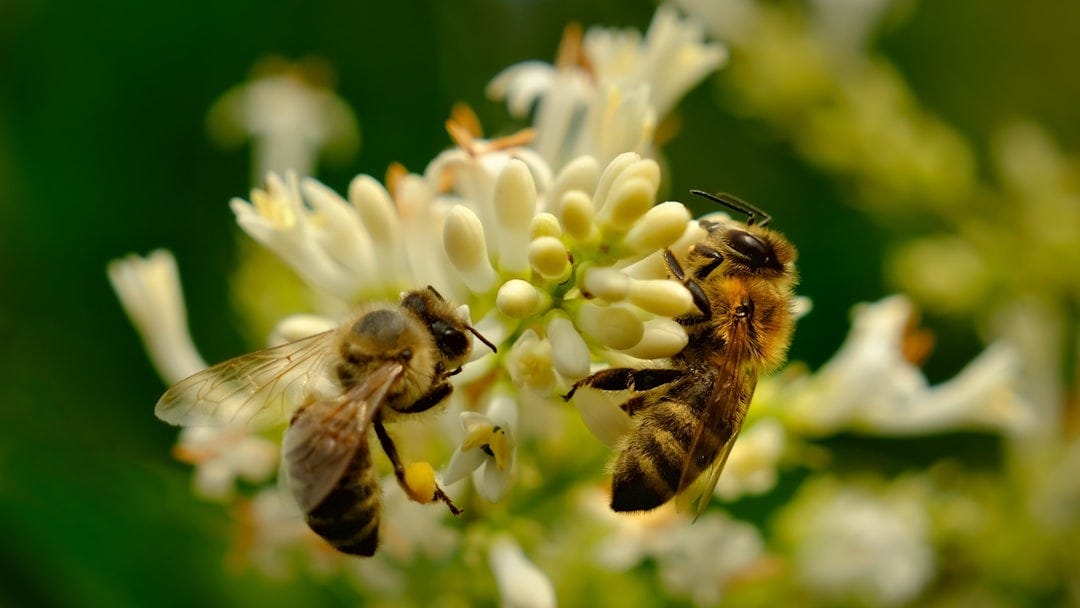
You read this month’s newsletters about bees, right? This is the one where beekeepers send their bees to California for … pollination services. Your turn! For this exercise, please
explain pollination services in two short paragraphs …
… but without using the words “crops” and “revenue generator”.
Bonus if you include “macaron” and “rainbow”.
Why this exercise?
Through limiting your playing field, this exercise sparks creativity. Banning jargon like “revenue generator” will make you think what a term like that actually means, just like avoiding “crops” will force you to be specific and evoke images. Both will make your piece easier to understand, a delight to read - and more fun to write, too. Plus, in the bonus part, there might be a little mischief involved, too.
Get lost … in a good way!
An explainer is a great tool, but it’s not the only one. Let’s go on a treasure hunt for more tools! Marvel at wordsmiths and artists who explain climate change without … explaining (in the traditional sense). Where are the photo essays, comic strips, reportages, fictional stories …? Search the web for ways to present climate issues and solutions!
Please send links to the treasures you found in the comments!
If you like these writing exercises, you’ll get more from me whenever there is a fifth Thursday in a month. Which will happen again in October.
What’s next? Let’s celebrate! Since I switched from roughly one post a month to a weekly schedule, I have delivered more than 25 newsletters (this one here is #26). It’s a milestone!!
And it shouldn’t become a millstone I’m trying to drag. Therefore, Climate Culinarians will take a break in August. I will use this time off writing for research and interviews, so I can continue to deliver weekly newsletters. You’ll still see me posting little things on Substack Notes if you’re following me there (or find Notes on the top of the website, right under the name Climate Culinarians).
I promise that September will bring the hottest newsletters I’ve ever delivered. Not just due to the role chili peppers will play in them, but because … nope, you gotta wait and see.
Read, eat, repeat!
Petrina
Climate Culinarians is a project by me, Petrina Engelke. I write about climate and food, and I help other writers turn their ideas into a book people want to read. In other words: I’m a journalist and a book coach. Read more about this newsletter & me here.